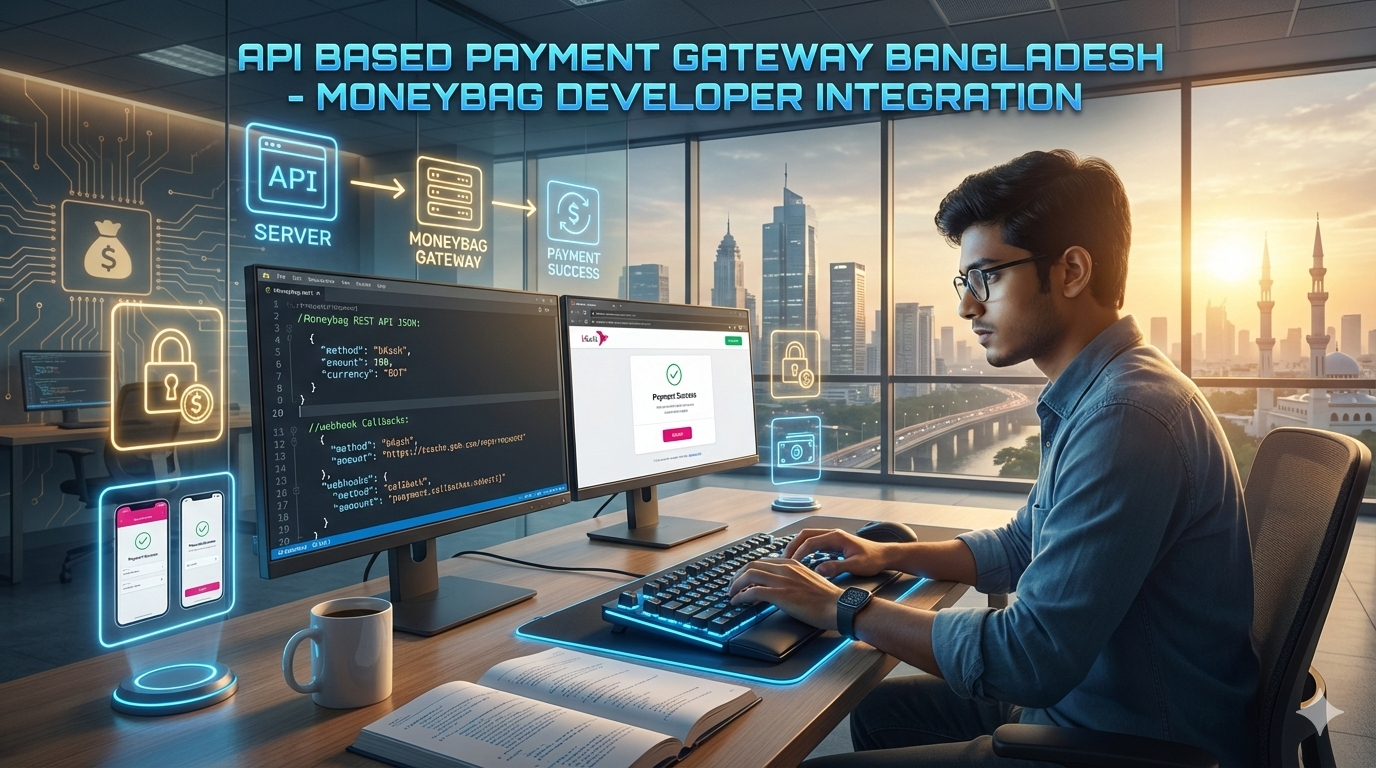
API based payment gateway integration for developers Bangladesh
If you’re a developer in Bangladesh, API based payment gateway integration is part of the job now.
Web apps, mobile apps, SaaS tools, eCommerce sites. All of them need online payments.
This guide explains API based payment gateway integration from a developer’s point of view. Simple language. Clear steps. No sales talk
What Is an API-Based Payment Gateway?
An API-based payment gateway lets your system talk directly to a payment provider.
Your app sends a request.
The gateway processes the payment.
You get a response.
That’s the core idea.
Unlike manual or hosted-only systems, APIs give you control. You decide how payments fit into your product.
Why Developers Prefer API-Based Gateways
Redirect-only solutions work, but they feel limited.
APIs give flexibility.
Main reasons developers choose API-Based Gateway
- Full control over checkout flow
- Better user experience
- Easier automation
- Cleaner backend logic
And when something breaks, debugging is easier.
Common Use Cases in Bangladesh
API-based gateways are used in many local projects.
Typical examples
- eCommerce websites
- SaaS products
- Subscription platforms
- Digital services
- Mobile apps
If payments are part of your product, APIs make sense.
Payment Methods You’ll Work With
Most Bangladeshi gateways support the same core methods.
Cards
- Visa
- Mastercard
- Local debit and credit cards
Mobile Financial Services (MFS)
- bKash
- Nagad
- Rocket
As a developer, your job is to support these cleanly and handle edge cases.
Basic Payment Flow (Developer View)
This is a simplified version of how most APIs work.
- Create an order on your server
- Send payment request to the gateway API
- Redirect user or open payment UI
- User completes payment
- Gateway sends callback or webhook
- Verify payment on server
- Update order status
Never trust client-side success alone. Always verify.
What to Check Before Choosing a Payment API
Not all APIs are developer-friendly.
1. Clear Documentation
You should see:
- API endpoints
- Required parameters
- Sample requests
- Sample responses
If docs are vague, integration will take longer.
2. Sandbox Environment
A sandbox lets you test without real money.
You should be able to:
- Simulate success
- Simulate failure
- Test callbacks
No sandbox is a red flag.
3. Webhooks and Callbacks
Webhooks notify your server about payment status.
You’ll use them for:
- Payment confirmation
- Failed payments
- Refunds
This is critical for automation.
4. Security Basics
At minimum:
- HTTPS
- API keys or tokens
- Signature verification
Security should not be optional.
Moneybag API for Developers in Bangladesh
Moneybag is a local payment gateway built for Bangladeshi businesses and developers.
Why developers often choose Moneybag
- REST-based API
- Card and MFS support
- Local bank settlement
- Clear integration steps
Moneybag’s API is designed for common use cases, not edge experiments. That works well for most products.
High-Level Integration Steps
This is a general flow most developers follow.
Step 1: Account and KYC
- Register business
- Submit documents
- Get API credentials
Step 2: Sandbox Integration
- Use test keys
- Send payment requests
- Handle responses
Focus on error handling here.
Step 3: Payment UI
- Redirect checkout
- Embedded flow
- Payment link
Depends on product needs.
Step 4: Callback Handling
- Verify transaction ID
- Match amount and order ID
- Update database
Never skip verification.
Step 5: Go Live
- Switch to live keys
- Monitor logs
- Watch failed payments
Production issues always show up eventually.
Common Developer Mistakes
These show up often.
Trusting frontend success
Never do this. Always verify server-side.
Ignoring failed states
Payments fail. Design for it.
Mixing sandbox and live keys
This causes confusion fast.
Weak logging
Logs save hours during debugging.
Comparison: Payment Gateway APIs in Bangladesh
Here’s a simple comparison from a developer’s angle.
This is a general view. Always check current docs before committing.
Local vs International APIs
Some teams consider Stripe or PayPal.
International APIs
Pros:
- Mature tools
- Advanced subscriptions
Cons:
- Hard onboarding
- Currency issues
- Lower local card success
Local APIs
Pros:
- Better success rates
- MFS support
- Faster local settlement
Cons:
- Fewer advanced billing tools
For Bangladesh-focused products, local APIs usually work better.
Best Practices for Clean Integration
- Generate unique order IDs
- Store gateway transaction IDs
- Validate amounts
- Retry webhook handling
- Keep API keys secure
Payments should be boring and predictable.
FAQs
1. Do I need a backend server for API-based payment integration?
Yes. Payment verification should always happen server-side.
2. Can I use payment APIs in mobile apps?
Yes. But sensitive logic should still stay on the server.
3. How long does settlement take in Bangladesh?
Usually a few working days. It depends on the gateway.
Final Thoughts
API-based payment gateway integration is not complex, but it needs care.
Good documentation, proper verification, and clean logic make a big difference.
Local gateways like Moneybag focus on real Bangladeshi use cases. That helps developers ship faster with fewer surprises.
Choose an API that fits your product today.
And design your payment flow so it doesn’t break tomorrow.